
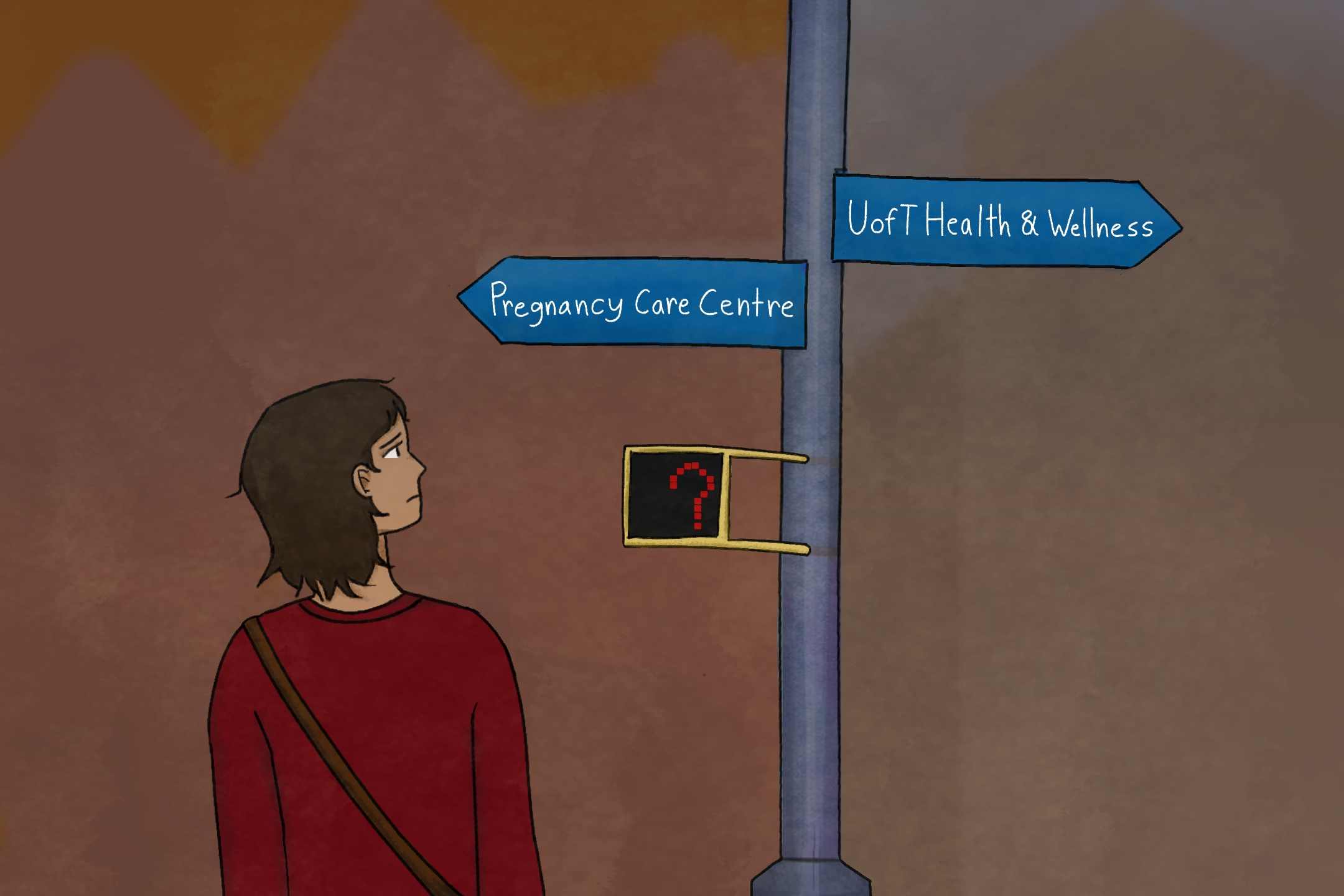
Within a U of T-affiliated building, a facility called the Pregnancy Care Centre (PCC) advertises “free pregnancy care services, support, and care” to students and members of the public. At first glance, their objective suggests a clinical, comprehensive health service.
A closer look, however, reveals a brief disclaimer stating, “we are not a medical clinic and do not provide or assist in arranging for abortions.” For individuals navigating an unexpected or time-sensitive pregnancy decision, that distinction may not be immediately apparent, nor its implications fully understood.
Let me be clear. Abortion is health care. It is critical medical service, one that is supported by clinical evidence, and that forms part of comprehensive reproductive care.
I believe academic institutions such as U of T are at their best when they expose students to diverse perspectives and remain open to new ways of thinking; universities should be places where ideas are tested, challenged, and refined through inquiry and evidence. At the same time, it is important to ensure that all services perceived as health-related on campus are clearly understood by students seeking care during vulnerable moments.
U of T has committed itself to “fostering an academic community in which the learning and scholarship of every member may flourish, with vigilant protection for individual human rights.” Those commitments provide an important framework for considering how health-related services operating under the university banner are experienced by students.
Access to abortion should be safe
As Medical Director of U of T’s Health & Wellness Centre, I affirm our unequivocal commitment to providing students with safe, timely, non-judgmental access to abortion services, and to accurate information about all options for reproductive care.
Across Canada, abortion care is recognized as an essential component of primary and reproductive health services. The College of Family Physicians of Canada, the Canadian Medical Association, and the Society of Obstetricians and Gynaecologists of Canada all affirm that abortion is standard medical care, and that clinicians have an ethical obligation not to obstruct or delay access through refusal to provide information or referral.
Although some pregnancy centres are unregulated, some are able to situate themselves near legitimate abortion providers or medical clinics, where they tend to use ambiguous advertising to suggest that they provide abortion care in an effort to recruit clients. However, these organizations, such as the PCC, are not required to assist people in referral or comprehensive counselling.
At Health & Wellness, students can see a licensed physician and access abortion care directly through medication, or through referral to community providers when procedural care is required. Care is delivered confidentially, without judgment, and with attention to the realities students face, including time sensitivity, financial barriers, academic pressures, and privacy concerns. This is what student-centred, evidence-based care looks like.
The presence of the PCC on campus warrants scrutiny, especially because they don’t offer the same comprehensive abortion care as other health services offered at U of T. While the organization operates independently of the university, its physical location may reasonably be interpreted by students as carrying institutional legitimacy or endorsement.
Furthermore, the PCC’s website states that it opened its “first permanent office at the University of Toronto.” For a student seeking urgent pregnancy-related care, it is understandable that they may attend the PCC expecting comprehensive medical support. In my clinical practice, I have cared for students who told me they felt confused about their options after they had attended the PCC seeking help.
The Government of Canada has documented that crisis or pregnancy care centres are not regulated health care providers, and do not offer comprehensive reproductive services, including an abortion referral.
While some provide information about abortion care, it may be incomplete or misleading, particularly around abortion safety, fertility, and timelines for decision-making. Even when intentions are framed as supportive, the absence of an abortion referral can contribute to delays that affect access to care.
In order for patients to make well-informed decisions, crisis and pregnancy care centres must not be allowed to advertise themselves as medical facilities.
Dangers of delay
Delaying access to abortions has consequences. Medical abortions are among the safest interventions, but access becomes more complex, more costly, and more limited as pregnancy advances. For students, delays can intersect with immigration status, housing instability, academic deadlines, and a lack of social support. Ensuring clarity about campus services helps reduce the consequences of delayed access to safe abortion care.
U of T is not new to students expressing distress in response to graphic anti-abortion demonstrations on campus, underscoring that reproductive health is not an abstract political issue for students. It is a lived, personal, and often time-sensitive reality.
At the same time, the university community has also been a site of leadership on abortion access: students and researchers have contributed to academic work on reducing barriers to care, addressing stigma, and centring the experiences of young people and marginalized communities in reproductive health policy. This scholarship reflects a consensus within medicine and public health: reproductive autonomy is foundational to health and well-being.
Every form of health care needs to be accessible
Universities are spaces for pluralism and debate, but they are also places where students reasonably expect that health-related services on campus will align with established medical standards. Consistency and transparency help ensure that students can make informed decisions at moments when clarity is critical.
Of course, affirming that abortion is health care does not negate support for those who choose to continue a pregnancy. Comprehensive reproductive care includes prenatal care, parenting support, adoption counselling, and abortion services. What health care cannot include is the withholding of medically accurate information or the upholding of barriers to accessing care.
As Medical Director and as a practicing physician, my responsibility is to the health and autonomy of students. That responsibility includes speaking plainly. Abortion is health care. U of T Health & Wellness Centre will continue to provide safe, evidence-based, and student-centred care. That fact remains unambiguous.
Dr. Allison Rosen is the Medical Director of the Health & Wellness Centre at UTSG. She is also a proud University of Toronto alumnus, having received her Master of Science from the Institute of Medical Sciences in 2012.

No comments to display.